Lexington Brick That Outlived Its Mortar, and Where Your Request Goes
The median Lexington house went up in 1979, which puts a great many original chimneys past forty-five winters. This page reads what those stacks are saying: the housing stock, the method, the calendar, and the limestone in the name.
Limestone Chimney Co is the doorbell, not the mason: what you send here is passed along to one Lexington-area chimney and masonry company, independent of this site, whose masons write the scope and do the work.
Forty-five winters, give or take
Roughly two of every three houses in Lexington were standing before 1980, and most of them were built with a masonry chimney that has never been touched since. A Kentucky winter crosses the freezing line dozens of times, and each crossing works on that masonry: rain and snowmelt soak into a hairline gap in a mortar joint, the water freezes and swells by about nine percent, the gap opens a little wider, and the next thaw lets in more. Give that cycle forty-five years and you get what shows on rooftops across the city every week, joints gone to sand, crowns cracked through, brick faces popping off in sheets. None of it means the chimney was built badly. Mortar, crown and flashing are the sacrificial parts, meant to be renewed on schedule, and renewing them is the trade.
Match the mortar, grind the joint
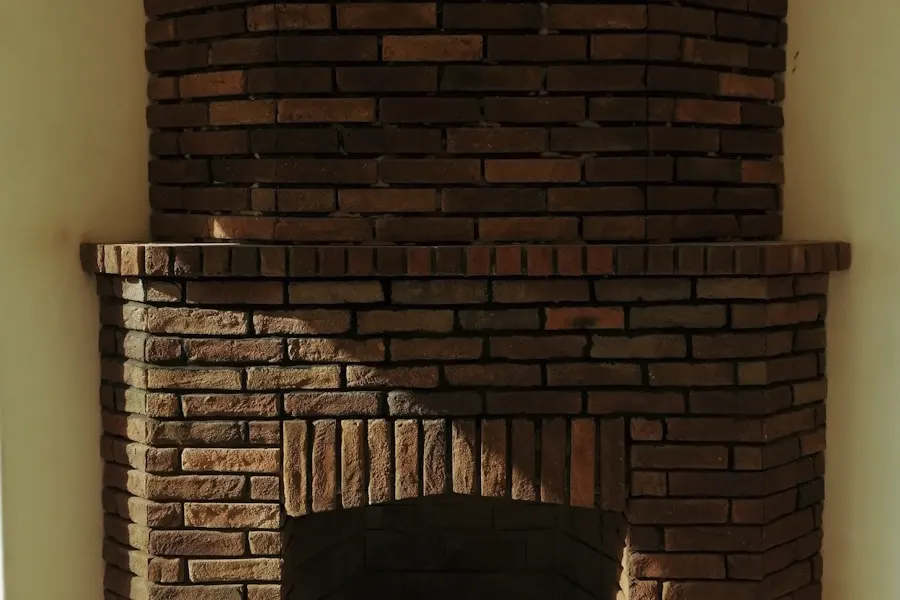
Lexington's brick spans a century and a half, and mortar chemistry changed along the way. Pre-war walls were laid in soft, lime-rich mortar that moves with the brick; modern Portland mixes are far harder, and a hard mortar on soft brick wins every freeze-thaw argument by shearing the brick faces off. So strength, sand color and joint profile should be matched to what is already there, whether the stack belongs to a shotgun house near downtown or a two-story in Hamburg. Failed joints should be ground out to sound depth before new mortar goes in, never smeared over; fresh work should be covered and, in shoulder season, scheduled around frost. It is fair to ask for photos of the stack before, during and after the work, because most owners never set foot on their own roof and should not have to take anyone's word for what is up there.
Repair, liner, inspection
- Repair & masonry
- Tuckpointing, crowns re-poured, spalled brick cut out and replaced, and stacks past saving rebuilt from sound courses up. The repair page carries the price table, and the cost guide works it symptom by symptom.
- Liners
- Cracked clay tiles and unlined older flues let heat and gases reach places they should never touch. A stainless liner sized to the appliance closes that path for good.
- Inspections
- Level 1, 2 and 3, for buyers, sellers and anyone lighting a first fire in a house they did not build. Ask for camera footage and a written, prioritized list rather than a sales pitch. The inspections page explains each level.
Three seasons, one chimney
Masonry runs March to November, because mortar needs warmth to cure. Inspections run all year, because real-estate closings do not wait for weather. Burn season, October to February, brings the first-fire surprises, smoke where it should not be and dampers that will not move. The smart time to fix a chimney is spring or summer, before the fall rush fills every calendar in town.
Limestone underfoot and in the street
The Bluegrass sits on limestone bedrock. It sweetens the pasture water, it named the street that runs through the heart of Lexington, and it is the reason stonework has always been at home here. The name is a standing reminder of the standard.
Six towns, six kinds of brick
Lexington and the ring around it: Georgetown, Nicholasville, Versailles, Winchester and Richmond, each on a page of its own, since the housing stock and the chimney problems change with every town line.
Weekdays, eight to five-thirty
Monday through Friday, 8:00am to 5:30pm, at (859) 493-8726. Or use the request form; anyone mid-transaction on a house gets first claim on the schedule.
Describe what the stack is doing, and the local company will read it for you.
Chimney repair, relining & inspections across Lexington, Georgetown, Nicholasville, Versailles, Winchester & Richmond.
Call (859) 493-8726