Chimney Waterproofing in Lexington, KY
After the Repairs, With a Repellent the Brick Can Breathe Through
Limestone Chimney Co treats chimney waterproofing in Lexington, KY as the last step on a stack, not the first: joints, crown and cap made sound, then a breathable water repellent that keeps rain out of the brick while the wall dries inward. That order starves freeze-thaw of the one thing it runs on.
Freeze-thaw runs on water. Waterproofing cuts off the supply.
Every repair on this site traces back to one mechanism: rain and snowmelt soak into a hairline gap, a Kentucky winter crosses the freezing line dozens of times, and each crossing turns that water into a wedge that swells by about nine percent. Give it forty-five winters and the joints go to sand and the brick faces pop off in sheets. Waterproofing does not stop the freezing. It stops the soaking, so there is far less water in the brick to freeze, which is what makes a fresh repair last.
Efflorescence: the chalky bloom that says water is moving
White streaks and a chalky bloom on the brick are efflorescence, mineral salts that water picked up on its way through the masonry and left behind when it dried on the surface. The stain does no harm and brushes off. What it announces does: water is traveling through the chimney wall and drying out of the face, so it is getting in above. Scrubbing the bloom off and coating the brick treats the symptom. Closing the entry point, then making the face shed water, treats the cause, and the staining stops coming back.
Why a sealer over old brick makes freeze-thaw worse
A film-forming sealer, paint or a clear coating wraps the brick in a skin that water cannot cross in either direction. The water already inside the wall is trapped behind the film, and the next freeze does its work from the inside. That is why old masonry is never wrapped in a sealer here. The right product is a breathable water repellent: it soaks into the brick and mortar rather than sitting on top, turns rain away at the surface, and still lets vapor escape, so the wall can dry.
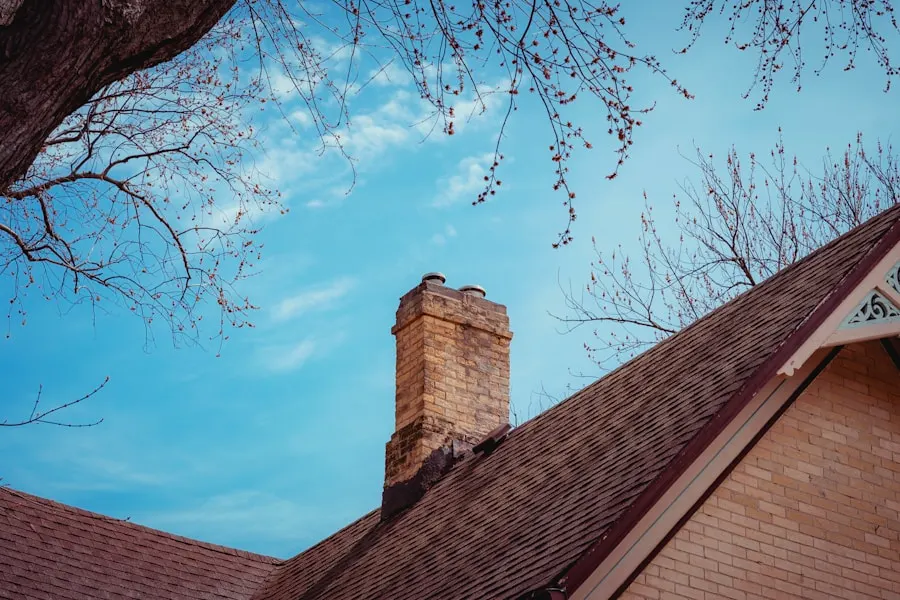
Repairs first, repellent second, never the other way round
A repellent over open joints, a cracked crown or a missing cap is paint on a leaking bucket, and it makes the diagnosis harder later. So the stack is read from the top down first: sandy joints repointed, a cracked crown resurfaced or poured new, a bare flue given a stainless cap, lifted flashing let back into its joint. Spalled brick, its weather skin already gone, is cut out and replaced, because no repellent restores a face that has blown off. Then, once the masonry is sound and dry, the repellent goes on every exposed face, in warm weather for the same reason the masonry is.
What chimney waterproofing costs in Lexington, and why it is scoped with the masonry
No figure for waterproofing is printed on this site, because on its own it is rarely the job. It is priced on the written scope with the repairs it follows, and the same things move it: how many faces the stack exposes to the weather, its height above the roof, and how the roof is reached. The bands published here are for the repairs that come first, repointing and rebuilds; if a stack needs no repair before the repellent, the scope says so and carries the smaller number. The sideways rain that gives Nicholasville its leaks is exactly the weather a repellent is for.
What callers ask about sealing a chimney
Does chimney waterproofing stop efflorescence?
Should I seal my chimney brick before winter?
How much does chimney waterproofing cost in Lexington?
Dry the wall out, then keep it dry.
Call (859) 493-8726, Mon–Fri 8:00am–5:30pm, or request the top-down read — the entry points photographed, the repairs scoped, the repellent last.