Why Does My Chimney Smell?
Water in the Flue, Air Moving the Wrong Way, and the Repair That Belongs to Each
Limestone Chimney Co answers "why does my chimney smell?" the way a mason would for a Lexington house: the smell is what old fires left on the flue walls, and it reaches the room when water gets into the flue or air starts coming down it instead of going up. This page takes the causes one at a time.
A chimney smell is an old fire, plus water or a draft turned around
Every flue that has carried smoke keeps some of it: a dark layer of soot and creosote on the tile or brick, which a camera shows at any inspection. Dry, and with air rising through the flue, that layer stays put and nobody notices it. Wet it, or send the air downward, and the fireplace smells like a campfire put out with a hose. So the useful question is what changed: where the water is getting in, or why the air has turned around.
An open flue, a cracked crown, and the smell that follows rain
The top of the stack is the usual way in. A flue with no cap, or a galvanized cap that has rusted out, takes in rain with every storm, and that water runs down to the firebox and rusts the damper on its way. A cracked crown does the same thing more slowly, feeding water into the brickwork around the flue. Wet soot and damp masonry are what a musty, smoky smell is made of, which is why it is strongest in the day or two after rain. The repair is on the roof: a stainless cap over the flue opening and a crown that sheds water, read on one visit and quoted together. On a prefab chimney the chase cover has the same job.
Why a chimney smell is worse in summer
Two things line up in a Kentucky summer. The air is humid, so whatever the flue has soaked up stays damp. And the house is closed with the air conditioning running while the fireplace sits cold. A cold flue does not pull upward the way a warm one does, so outside air can drift down it and bring the smell along. Nothing has to be burning for that to happen, which is why a fireplace can smell strongest in the months it is never lit.
A damper that will not close lets the flue into the room
With no fire lit, the plate in the throat of the fireplace is all that separates room air from flue air. Rusted open or warped, it no longer seals, and every downward drift arrives in the living room. A throat damper that has rusted or warped can often be freed or replaced. Where no matching plate exists, a top-sealing damper closes the flue at the top with a gasketed lid, which keeps the rain out as well. One exception: a vented gas log set needs its damper kept open at all times, so a smell at that fireplace is a venting question first.
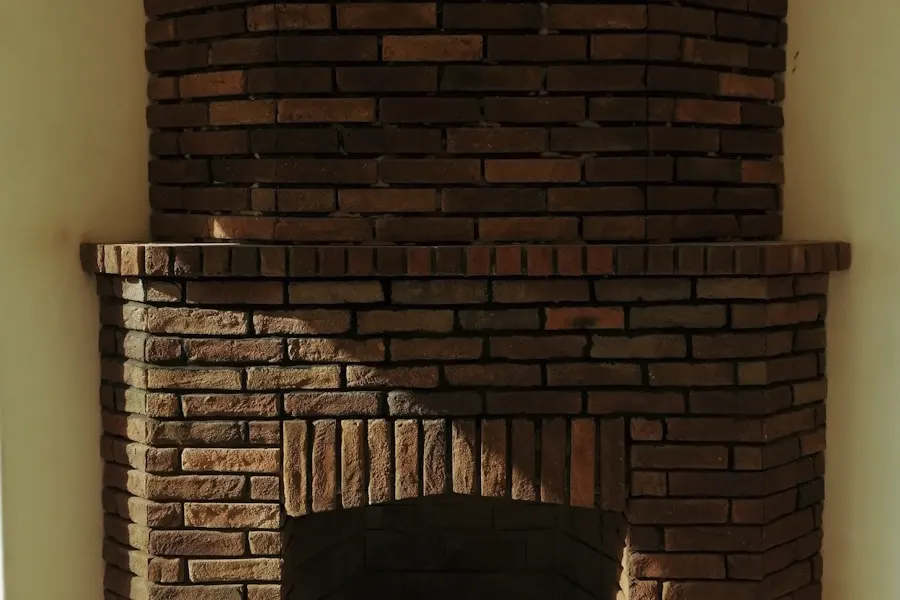
Chimney draft problems: air coming down when it should go up
Smoke rolling into the room when a fire is lit, or a smell that arrives whenever an exhaust fan is running, is a draft problem. A flue draws because warm gas rises through it. Ordinary things break that: a flue that is cold while the night air is damp, exhaust fans that pull replacement air into the house through the easiest opening, and a flue too large for what burns under it, which drafts slowly. Smoke staining on the lintel is the mark of a flue that has not been drawing. The repair follows the cause. A liner sized to the appliance keeps the flue gas warmer and moving faster, and a blockage such as a slipped tile, leaves or a nest shows on camera.
The damp smell from a coal-era flue with a gas furnace on it
Some chimney smells have nothing to do with the fireplace. In older houses around Lexington, and often in Winchester, a gas furnace or water heater is piped into a wide masonry flue that was built for coal and may never have had a liner. Exhaust from a gas appliance leaves cool and carries a lot of water vapor, and in a flue that size it turns to liquid on the way up. The moisture is slightly acidic. It shows as damp spots on the chimney wall indoors, a white crust on the bricks near the top and rust streaks around the cleanout door, and it brings a damp, sour smell with it. Work at the top of the stack will not cure this one, since the water starts at the bottom. What cures it is a stainless liner matched to the appliance, which runs $1,500–$7,000 in the Lexington market. Kentucky's own rule points the same way: under the Kentucky Residential Code a masonry chimney shall be lined, and the lining has to suit whatever appliance vents into it.
What a chimney smell is not: a carbon monoxide warning
A smell tells you about damp and draft. It tells you nothing about carbon monoxide, a gas the federal Consumer Product Safety Commission calls colorless and odorless. A flue with a draft problem and a gas appliance under it is exactly where that matters, so the commission's advice holds whether or not anything smells: put a CO alarm on each level of the house.
Find the cause before paying for a cure
Anything that masks the smell treats the room and leaves the flue as it was. The order that works is to find the water or the draft first. A chimney inspection looks at the flashing, crown and cap from the roof and at the damper and firebox from below, and a camera run covers the flue itself, including how much earlier fires have left on its walls; that page also says what happens when a flue needs cleaning. Tell whoever comes what you have noticed: whether the smell follows rain, heat, a running fan or the furnace cycling on. Ask for the findings as a written scope, where the masonry items sit with the repair work on the stack itself. Cap, crown and other masonry work runs March to November here. An inspection or a liner does not wait for the weather.
What owners ask when the fireplace smells
Why does my chimney smell when it rains?
Why does my fireplace smell like smoke when there is no fire?
Is a chimney smell dangerous?
Find the water, or find the draft.
Call (859) 493-8726, Mon–Fri 8:00am–5:30pm, or request a visit, and say when the smell shows up: after rain, in the heat, or with the furnace running.