Chimney Flashing Repair in Lexington, KY
Step Flashing, Counter Flashing, and Why the Tar Patch Fails
Limestone Chimney Co looks at chimney flashing repair in Lexington, KY from the chimney’s side of the joint: the metal is let into the mortar, not glued to the brick. This page is the flashing itself: the two layers, why a tar patch lets go, and when the fault is the stack’s rather than the roof’s.
Step flashing under the shingles, counter flashing in the brick
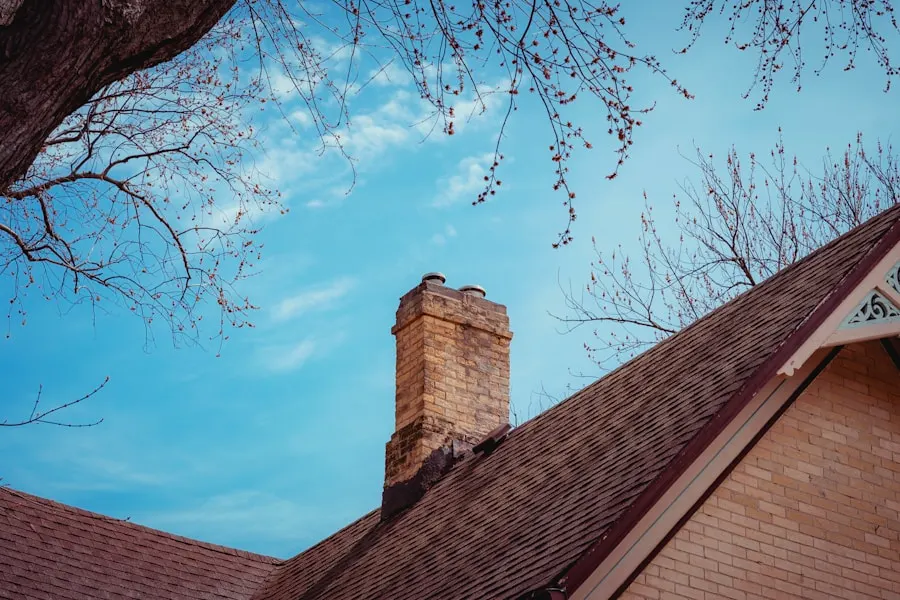
Flashing is two layers doing two jobs. Step flashing is L-shaped metal woven in with the shingles, one piece per course, each turned up the side of the chimney, so water that gets under the roofing is carried back out onto the shingle below. Counter flashing is a strip let into a mortar joint above and bent down over the step flashing, so rain running down the brick cannot get behind the first layer. Roof and chimney move at different rates through the year; the overlap lets each move without opening a gap. Nothing in a proper joint is glued.
Why a roofer’s tar patch lets go
The common shortcut is a bead of roofing cement along the top edge of the metal, or new counter flashing stuck flat to the brick with sealant instead of cut into the joint. Both fail the same way: the compound cures hard and shrinks away from a brick face that was never flat, and each of the dozens of freezes in a Kentucky winter opens the hairline a little further. When the ceiling stain returns, the patch has hidden the failure under black, and the joint has to be cleaned before metal can go into it.
When the leak is the chimney’s and not the roof’s
Step flashing belongs to the roof and is replaced with it. The counter flashing and the joint it sits in belong to the masonry, and that joint is the usual culprit: counter flashing only holds in sound mortar, and a new strip in a joint gone to sand loosens the way the old one did. The joint is repointed first, then the metal is let in. The other chimney-side cause sits higher: a cracked crown sends water down inside the brickwork to surface at the flashing line, looking exactly like a flashing leak, so the stack is read from the top down before anything is re-flashed. All five entry points are on the leak repair page.
Cutting the reglet and letting the metal in
A proper counter flashing repair starts with a saw, not a caulk gun. The mortar joint is cut back to depth, a slot called a reglet, and the new metal is bent into it, turned down over the step flashing and locked in with mortar matched to the house. Corners get their own folded pieces, because a corner is where a patch leaks first. On a wide chimney a small peaked saddle on the up-roof side sends water around the stack instead of against it. Set in fresh mortar, the work belongs inside the March-to-November masonry season.
Why no flashing price is printed here
The variables that set a flashing figure live under the shingles: the roofing material, whether the counter flashing was ever let into the joints, and how much decking the water has softened. Expect it priced after the roof visit, in writing, and ask for photographs of the flashing and the crown above. What moves that number is on the flashing repair cost page; the joints and crown the flashing depends on are priced with the rest of the masonry menu above the roofline.
What callers ask about the metal at the roofline
What is the difference between step flashing and counter flashing?
Can chimney flashing be sealed with roofing tar instead of replaced?
Does chimney flashing get replaced when the roof is replaced?
Metal into mortar, not tar over brick.
Call (859) 493-8726, Mon–Fri 8:00am–5:30pm, or book a roof visit for the flashing — the flashing photographed, the joint read, the figure in writing.