Chimney Tuckpointing in Lexington, KY
One Job, Two Names, and What It Costs Here
Limestone Chimney Co describes chimney tuckpointing in Lexington, KY done the slow way: failed joints ground out to sound mortar, new mortar matched to the brick, and a written figure inside the $500–$2,500 band before anyone climbs.
What repointing a chimney costs in Lexington, and what moves it inside the band
Tuckpointing and repointing are the same job — mortar joints that have finished their working life cut out and refilled — and in this market it runs $500 to $2,500. Three things place a chimney inside that band: how many joints have failed, how tall the stack is, and how the roof is reached. Joint loss limited to the top few courses sits at the low end; a full-height repoint on a two-story stack, worked on every face, reaches the high end. Ask for the firm number in writing, once someone has been on the roof. A stack that has moved, with a lean, stair-step cracks or bricks that shift by hand, is a rebuild, from $4,000, and a fair estimate says so.
| What the roof visit finds | Where it lands |
|---|---|
| Joint loss in the top few courses only | Low end of $500–$2,500 |
| Every face of a tall stack, full height | High end of $500–$2,500 |
| Spalled bricks among the failed joints | Itemized per brick, in the same scope |
| The stack has moved | Not a repoint — a rebuild, $4,000 to $15,000 |
Reading your own joints before you call
Run a key along a mortar joint at shoulder height. If gritty sand rains out, the mortar has broken its bond from the inside: a Kentucky winter crosses the freezing line dozens of times, and each crossing turns the water in a hairline gap into a wedge that expands about nine percent. White streaks down the brick are the earlier warning, salts left behind by water moving through the masonry, and a chimney flagged that early usually repoints near the bottom of the band.
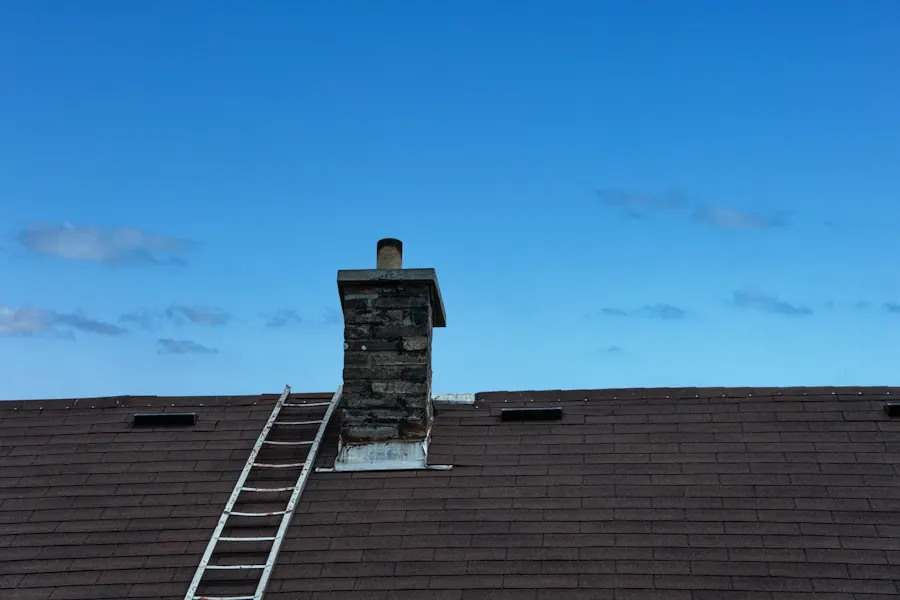
Three-quarters of an inch, down to sound mortar
The shortcut in this trade is smearing fresh mortar over failed joints without grinding them out. It photographs well and falls out in two winters. Joints done right are ground out to at least three-quarters of an inch, down to sound mortar, before anything new goes in — slower, and the only way the work lasts. Ask any bidder how deep they grind. Fresh work should be covered while it cures and, in the shoulder months, scheduled around frost, because mortar laid in the wrong week is mortar laid twice.
Lime for the old walls, Portland for the new
Lexington's brick spans a century and a half, and the mortar has to match the era. Pre-war walls near downtown and in Georgetown's historic core were laid in soft, lime-rich mortar that flexes with the brick; put a hard modern Portland mix in those joints and the mortar becomes the hardest thing in the wall, and the brick faces shear off. So what is in the joints should be tested and matched (lime-rich mixes for lime-built walls, color-matched sand, the joint tooled to the original profile), while a 1990s two-story in Hamburg takes the harder mix it was built with.
Book it for spring, ahead of the fall rush
Masonry in the Bluegrass runs March through November because mortar cures properly in warm weather, and spring is the smart slot, ahead of the rush that fills every chimney calendar once the first cold nights arrive. Repointing work runs from Georgetown's downtown blocks to Winchester's thick-walled old stacks, and the order is the same everywhere: diagnosis first, because repointing the joints without closing the water source above them is how the same chimney gets fixed twice. Everything else on the stack, crowns to rebuilds, is priced on the full repair price table. Repointed joints stay dry longer under chimney waterproofing done after the repairs, not before them.
What Lexington callers ask about tuckpointing
Is tuckpointing the same as repointing a chimney?
How do I know my chimney needs repointing and not a rebuild?
Why does the grinding depth matter so much?
A written figure for the joints, before the ladder goes up.
Ask for one roof visit, photographs of every failed joint and a firm number inside the band. Call (859) 493-8726, Mon–Fri 8:00am–5:30pm, or send the visit request.